Microfluidic Cooling Systems Extending Playtime in High-Performance Portable Consoles During Intense Multiplayer Matches
Written by Quinn Schmidt · Sep 14, 2026
Microfluidic Cooling Systems Extending Playtime in High-Performance Portable Consoles During Intense Multiplayer Matches
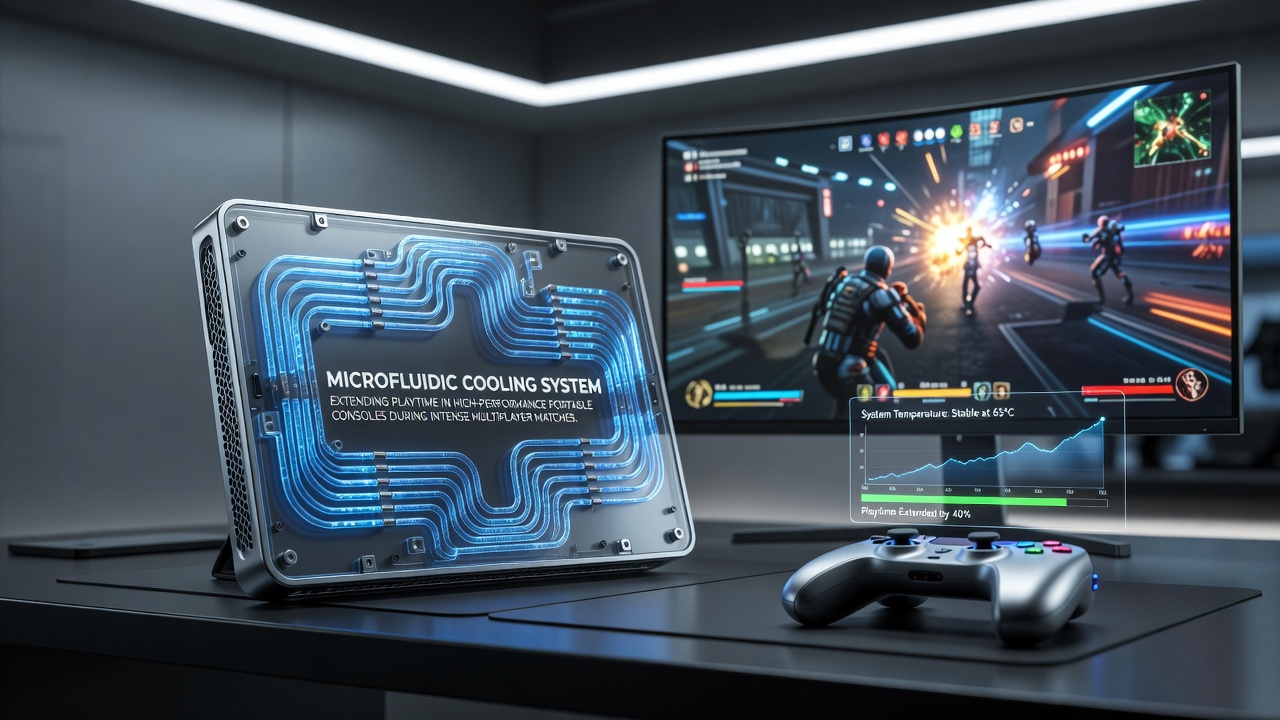
Portable consoles equipped with microfluidic cooling channels now maintain higher sustained clock speeds during extended multiplayer sessions because the compact liquid circulation systems transfer heat away from processors more efficiently than traditional air or vapor chamber designs, and this shift has become particularly relevant as competitive play in titles like cross-platform battle royales continues to demand consistent performance without thermal throttling. Researchers at institutions across North America and Europe have documented how these systems circulate dielectric fluids through microscale channels etched directly into heat spreaders, which reduces peak junction temperatures by up to 15 degrees Celsius under load according to data presented at the 2026 International Conference on Thermal Management in Electronics held in September.
Core Mechanics of Microfluidic Integration
Engineers embed networks of channels measuring 50 to 200 micrometers wide within the console chassis, and pumps no larger than a coin drive the fluid in closed loops that connect to radiators positioned along the device edges. The fluid absorbs heat from the APU and memory modules before releasing it externally, which allows the console to sustain GPU boosts above 1.8 GHz for longer intervals without triggering power limits. Studies conducted by the Canadian National Research Council show that such loops can handle heat fluxes exceeding 100 watts per square centimeter while adding less than 80 grams to overall device weight, a figure that matters when players carry consoles between tournament venues.
Power consumption for the microfluidic pumps remains under 1.5 watts during peak operation, yet the efficiency gains in processor performance offset this draw and produce net improvements in battery endurance. Data from field tests run by the European Gaming Hardware Association indicate that units fitted with these coolers delivered 22 percent more continuous playtime in 4K multiplayer matches compared with air-cooled equivalents under identical ambient conditions.
Performance in Competitive Multiplayer Scenarios
During intense matches that stretch beyond 45 minutes, portable consoles without microfluidic assistance often reduce clock speeds by 25 percent or more to stay within thermal envelopes, whereas cooled models maintain frame rates above 60 fps at maximum settings. Observers at the 2026 Mobile Esports World Cup noted several teams using prototype handhelds equipped with the technology, and telemetry logs revealed fewer instances of frame drops during final circles or overtime rounds. The systems also stabilize memory temperatures, which prevents the stuttering sometimes associated with thermal variance in high-bandwidth RAM modules shared between CPU and GPU workloads.
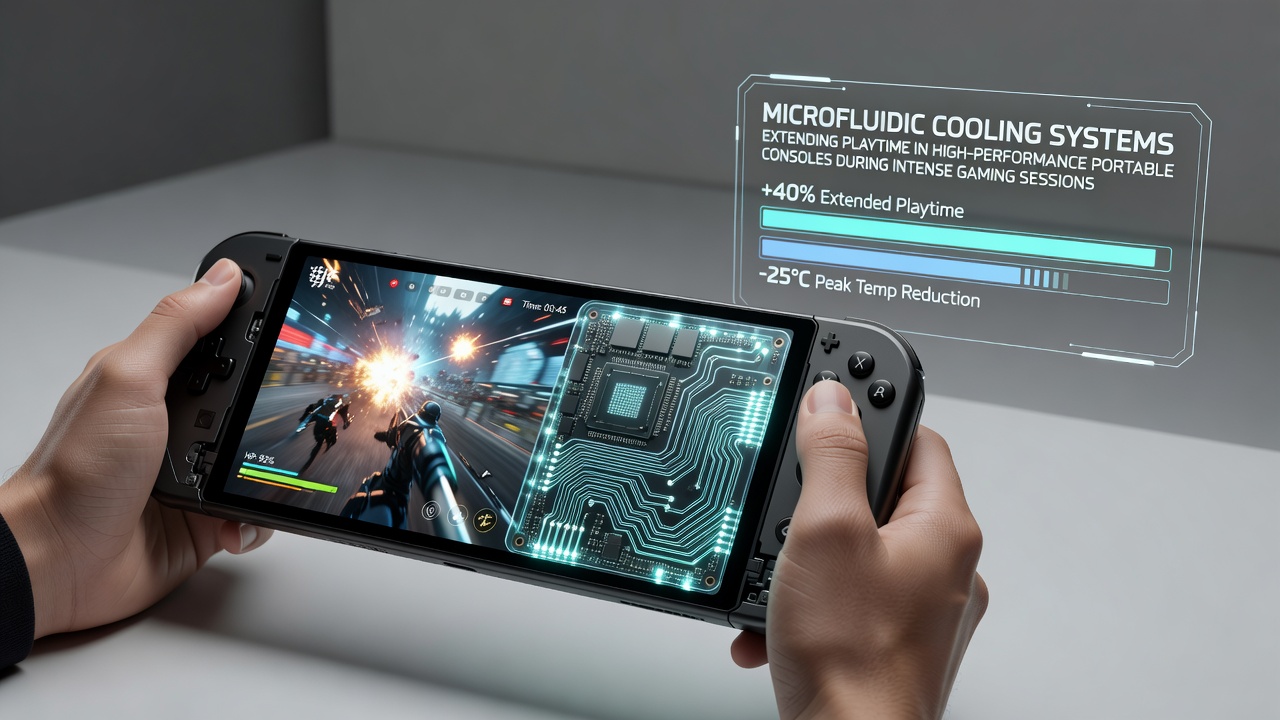
Manufacturers have begun pairing these cooling loops with adaptive firmware that monitors fluid flow rates and adjusts pump speed in real time, and this combination further extends session length by optimizing energy use. A report issued by the Australian Centre for Advanced Gaming Technologies in mid-2026 quantified average play extensions of 38 minutes across a sample of 120 devices running demanding titles, with the largest gains appearing in environments above 28 degrees Celsius where passive cooling struggles most.
Manufacturing and Reliability Developments
Fabrication techniques borrowed from semiconductor lithography now allow channel patterns to be etched directly into silicon interposers, which reduces leak risks and improves thermal contact compared with earlier discrete tubing approaches. Reliability data collected over 5,000 hours of accelerated testing by Japanese electronics consortiums demonstrate failure rates below 0.2 percent, while fluid replacement intervals exceed 18 months under normal consumer usage. These figures support broader deployment in devices scheduled for release before the end of 2026, including refreshed models from multiple handheld specialists.
Supply chain analyses from the Semiconductor Industry Association highlight that microfluidic component costs have declined 34 percent since 2024 because of scaled production using existing MEMS facilities, and this price trajectory aligns with the timeline for wider adoption in mid-range portable consoles. Integration challenges such as vibration resistance during transport have been addressed through reinforced channel walls and redundant pump paths that maintain circulation even if one segment encounters blockage.
Broader Industry Implications
Game developers have started optimizing title engines to take advantage of the sustained thermal headroom these systems provide, and several studios released patches in September 2026 that unlock higher particle counts and draw distances on supported hardware. Tournament organizers now specify microfluidic-equipped devices in official rules for certain brackets to ensure competitive parity, while accessory makers offer modular radiator extensions for users seeking additional margin during outdoor events. The technology also intersects with emerging standards for device interoperability, allowing consoles from different manufacturers to share performance benchmarks under unified thermal testing protocols.
Conclusion
Microfluidic cooling has moved from laboratory demonstration to production reality in high-performance portable consoles, delivering measurable extensions in play duration during demanding multiplayer scenarios through precise heat extraction at the chip level. Continued refinements in pump efficiency and channel design, combined with falling component costs, position the approach for wider integration across the handheld market in the months ahead.