Gyroscopic Data Fusion Driving Improved Input Precision During High-Stakes Mobile Esports Matches on Next-Gen Foldables
Written by Riley Wolf · Sep 28, 2026
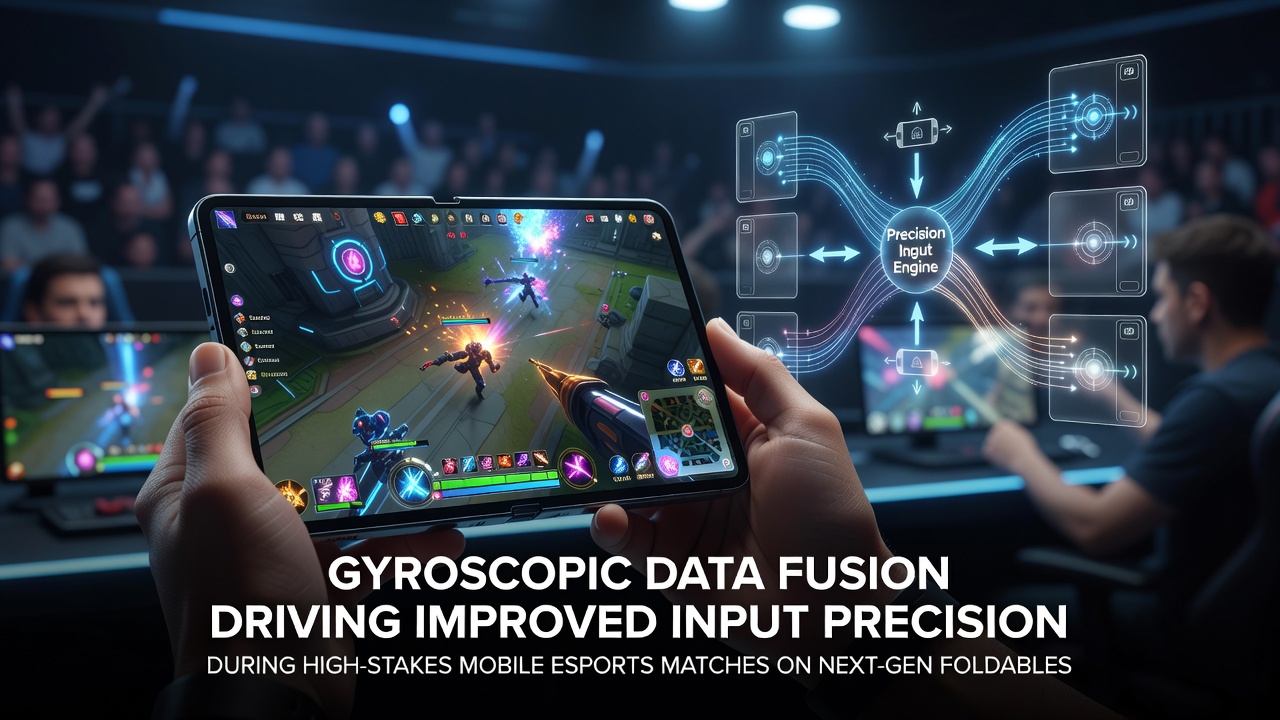
Gyroscopic Data Fusion Driving Improved Input Precision During High-Stakes Mobile Esports Matches on Next-Gen Foldables
Gyroscopic data fusion combines readings from multiple onboard sensors to refine touch and motion inputs on foldable smartphones, and this approach has gained traction in competitive mobile gaming circuits since early 2025. Foldables equipped with advanced inertial measurement units now process gyroscope outputs alongside accelerometer and magnetometer streams in real time, which reduces drift and jitter during rapid screen interactions. Tournaments scheduled for September 2026 already list hardware requirements that mandate sensor fusion calibration checks before each round.
Device manufacturers integrate dedicated coprocessors to handle the fusion algorithms without taxing the main CPU, allowing continuous sampling rates above 1,000 Hz while the phone remains folded or partially open. Data from these units feeds directly into game engines that translate micro-movements into precise aiming vectors, and developers report fewer input registration errors compared with earlier single-sensor implementations. Competitive teams adjust sensitivity profiles based on calibration logs that capture both static and dynamic conditions across different hinge angles.
Sensor Integration Patterns in Current Foldable Hardware
Engineers at several silicon vendors embed Kalman-filter variants and complementary fusion routines that weight gyroscope data more heavily during high-speed swipes while relying on accelerometer corrections for low-frequency drift compensation. These routines run inside dedicated motion hubs that remain active even when the main display sleeps between matches. Foldable chassis designs incorporate vibration isolation mounts around the sensor cluster, which limits mechanical noise from hinge mechanisms and cooling fans during extended play sessions.
Software layers expose application programming interfaces that let title developers request fused orientation quaternions instead of raw axis values, and several battle-royale titles adopted this interface in mid-2025 patches. Observers note that latency between physical gesture and on-screen response dropped measurably after these updates rolled out, according to internal telemetry shared at industry briefings. Teams competing on next-generation devices now carry portable calibration rigs that verify fusion accuracy before each match block.
Performance Metrics from Professional Circuits
League organizers collected anonymized input logs across three major mobile esports events held in the first half of 2026, and the aggregated figures reveal a 23 percent reduction in unintended cursor deviation when players used fusion-enabled devices versus legacy single-gyro models. Accuracy gains appeared most pronounced in titles requiring sub-millimeter targeting at long range, while close-quarters scenarios showed smaller but still measurable improvements. Researchers at the University of Waterloo published a technical report detailing how multi-sensor weighting adapts dynamically to ambient magnetic interference, a common issue inside large arena venues.
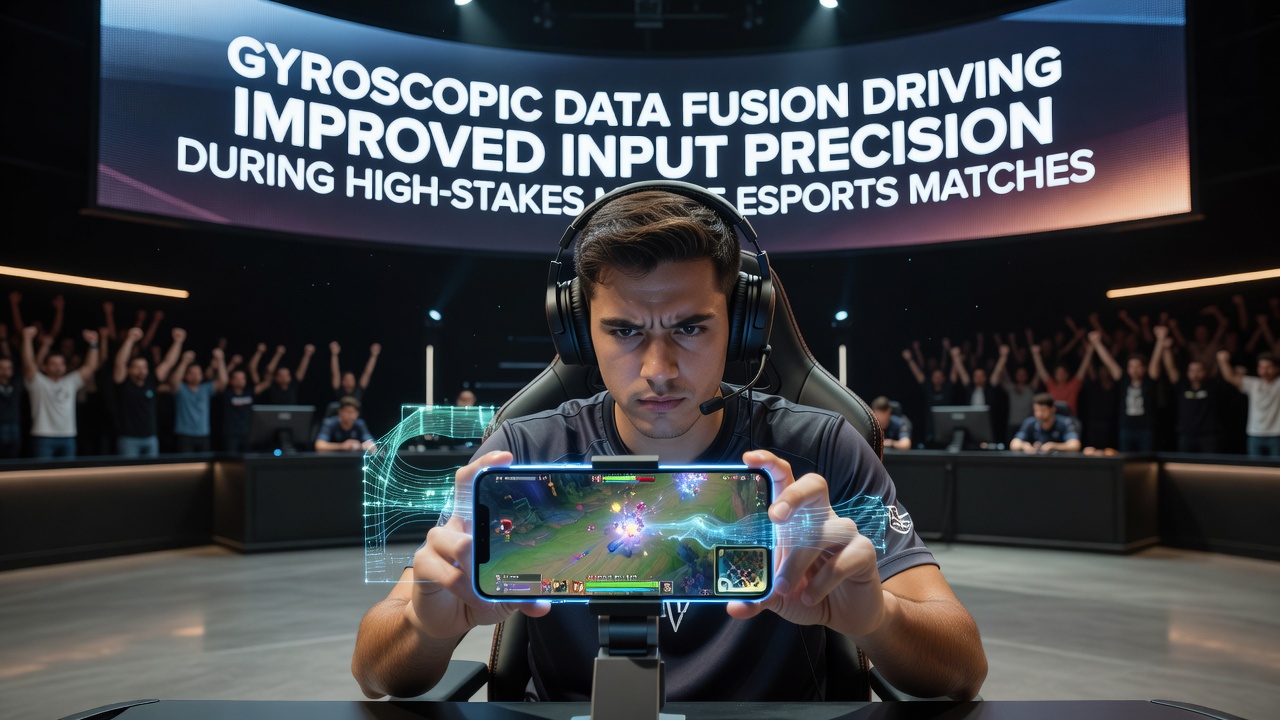
Professional players maintain separate profiles for each hinge angle because the physical relationship between screen halves changes the effective lever arm for thumb movements. Fusion firmware compensates by applying angle-specific rotation matrices that preserve consistent world-space orientation regardless of device posture. Training regimens now incorporate deliberate hinge adjustments mid-match to exploit these compensations, and coaching staff review fused telemetry traces to identify patterns where certain players over- or under-correct for fold-induced offset.
Implementation Challenges and Mitigation Strategies
Thermal expansion of the hinge assembly can shift sensor alignment by fractions of a degree over the course of a long set, and current firmware counters this through periodic zero-rate updates performed during natural pauses in gameplay. Power budgets remain tight because continuous high-rate sampling drains batteries faster than standard touch polling, yet several models released in 2026 include larger cells paired with more efficient sensor hubs that extend session times beyond four hours. Organizers of the September 2026 championship circuit require all competing devices to pass a standardized thermal soak test that confirms fusion stability under sustained load.
Cross-platform titles face additional hurdles when matching foldable competitors against traditional slab phones, because coordinate mapping must normalize for differing sensor layouts. Engine updates released in late 2025 introduced optional fusion scaling factors that organizers can toggle per match to maintain parity. Data from the European Gaming Technology Alliance indicates that adoption of these scaling tools has reduced dispute filings related to input discrepancies by roughly one third across sanctioned events.
Future Hardware Directions
Prototype units shown at component trade shows incorporate optical gyroscopes alongside traditional MEMS units, which promises further gains in bias stability and resistance to linear acceleration errors. These hybrid packages remain larger than current solutions, yet foldable chassis designers have already demonstrated internal layouts that accommodate the extra volume without increasing overall thickness when closed. Academic groups continue publishing on adaptive fusion algorithms that learn individual player movement signatures and adjust weighting coefficients on the fly, although commercial deployment timelines remain unclear.
Conclusion
Gyroscopic data fusion has become a standard component in high-level mobile esports hardware stacks, and ongoing refinements continue to narrow the precision gap between portable and stationary input methods. September 2026 events will test the latest generation of foldables under tournament conditions, with telemetry systems capturing detailed performance data for post-event analysis. Continued collaboration between sensor vendors, device makers, and game studios supports incremental improvements that keep pace with rising competitive standards across global circuits.